

- Why is listening so freaking hard?
- So, how can you fix it?
- Reason: Passing JLPT exam (or any other exam)
- Reason: Consuming Japanese media (anime, music etc.)
- Reason: Having Conversation in Japanese
Have you been learning Japanese for a few years, but feel like you know nothing when you turn anime on? Is LISTENING the scariest part of the JLPT exam for you? Or are you tired of nodding and awkwardly smiling when someone is talking to you in Japanese?
I feel you. Listening is imperative to becoming fluent in the language. And, improving your listening comprehension in Japanese requires consistent practice and exposure to the language. So let’s figure out why you are struggling with understanding others’ speech and arm you with tools and techniques to fix it!
Why is listening so freaking hard?
Besides the obvious reasons, like people having different speaking speeds, various accents and dialects, as well as overexaggerated delivery of a speech, like in anime, your ear might just not be used to different sounds present in the Japanese language. A lot of Japanese language learners who come from Western Countries (especially English-speaking ones) struggle to catch the sounds they didn’t grow up with. That results in difficulty speaking and understanding Japanese and other Eastern languages.

Another reason might be that you might have been studying alone for a while and spent a lot of time at the beginning of your study focusing on perfecting the Japanese writing system, grammar and reading that you didn’t have a chance to practice speaking or listening.
Do not worry, you are not alone. Many Japanese language learners know vocabulary and grammar and have no issue understanding it when it is written, yet, when they hear it, they fail to pick up the easiest words.
A lot of the time, learners can pick up on their issues like “Whenever I hear じゅう (juu) sound, I get confused”, or “When I hear a word that I don’t understand, I get hyper-focused on it and miss the rest of the conversation”. And I bet you know exactly where you have an issue when it comes to listening.
So, how can you fix it?
The obvious answer is that you have to immerse yourself in Japanese content/speech, and the best way to do so, is to go and live in Japan.
We put together a list of tools you can use to improve your listening skills, when going to Japan is NOT an option:
Reason: Passing JLPT exam (or any other exam)
If your main reason to improve your listening is to pass an upcoming JLPT exam, then whatever book you are already using for studying Japanese should be enough.
However, if you are looking for a target practice, here are some suggestions:
- New Kanzen Master Listening (新完全マスター聴解) is a great book to get ready for your listening exam. It has exercises to target specific listening skills as well as exam practice questions. Unfortunately, it does not have N5 version. (P.S. New Kanzen Master series is one of our favourite series for preparing for JLPT exam)


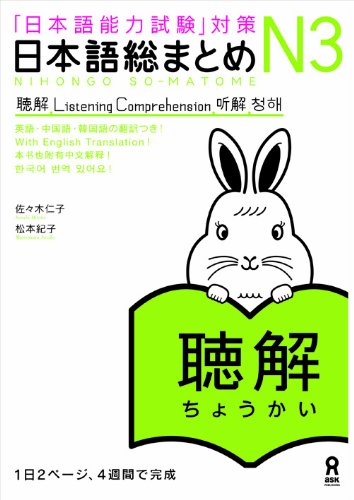
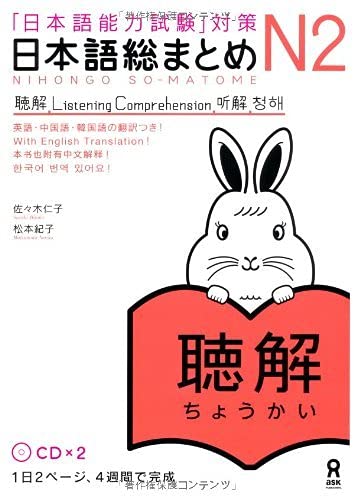
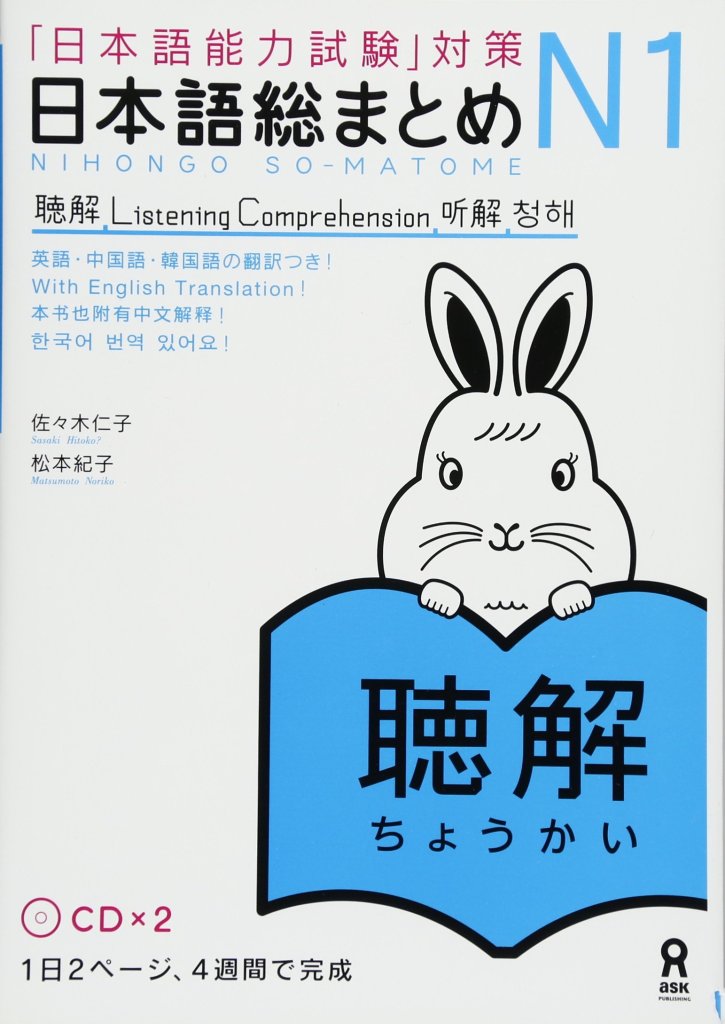
- Nihongo So Matome Listening Comprehension (日本語総まとめ) also has a series of books targeting specifically listening for N3 to N1 levels.
Reason: Consuming Japanese media (anime, music etc.)
You have probably already figured out that to be able to understand Japanese entertainment it is not enough just to watch 10 episodes of anime every day, like your friend Billy who has been at it for 10 years and can’t understand anything besides “nani”, “uruse” and “baka”. So let’s break down how to effectively consume Japanese media while bettering your listening skills and to be honest, your Japanese knowledge in general.
Anime & movies
Pick a show/movie or anime to watch. I think a series is always better than a one-off as with time you will get used to listening to character/actor voices and accents, so you will be able to understand them better with each episode, as well as repeating vocabulary. A lot of people will suggest you go for easy kids shows so there aren’t as many words and it is easy to understand. Others will suggest watching Terrace House and other reality TV shows to get a better understanding of day-to-day Japanese (my favourite is Love is Blind Japan, by the way). I suggest watching something that will keep you interested and engaged. Something that would make you want to come back to it and watch it (and potentially rewatch it) and enjoy learning from it.

Let me explain a step-by-step process using recently release anime on Netflix, My Happy Marriage. Yes, I suggest animes that are new & ongoing, so rather than rushing, you take your time to learn the new words and ease into your listening practice. And yes, I do suggest movie subscription services, like Netflix or Disney+, as there are countless Google Chrome extensions, like Language Learning with Netflix (https://languagelearningwithnetflix.com/) that can help you understand the context, translate and save new words into your vocabulary list. Bear in mind, these extensions are not always 100% accurate, so take them with a grain of salt and do your own research about words/phrases you don’t understand.
Anyways, watch an episode of My Happy Marriage in Japanese with Japanese subtitles (or without) and try to understand what’s going on. First, pick out the main characters, their names, relationships, and agendas. You can even make yourself a question list before watching, something like “Who are the main characters?”, “What happened in Episode 1?” etc. Answer these questions in Japanese, obviously. Secondly, create a vocabulary of new words every episode. Regardless, of how many words you didn’t understand, keep it simple and make 10-20 word vocabulary each time. You will inevitably forget half of them if your list has 50 words and you never encounter them again. So make sure you choose the most important words or words you want to remember. For instance, if you are a beginner, you will write down words like 結婚 (けっこん), 心配 (しんぱい) and 気持ち (きもち), and if you have been learning Japanese for a while, you will write down words like 希望 (きぼう) and 期待 (きたい). Add them to your vocab app. I like Quizlet, because it’s free. A lot of people are using Anki. Regardless, spend time learning these words, not only how they look visually, but also how they sound. Quizlet audio feature is quite good and 95% of the time has perfect Japanese pronunciation. Do not forget, you struggle with hearing the words, not seeing them. Lastly, come back to the same episode after 3-4 days or a week and make sure you have caught every single new word that you’ve learned. You might even make a checklist with the words.
If this is too intimidating for you, you can try watching movies or anime that you have already watched before, so you know the overall context and can focus more on catching new and old vocabulary.
You can also read manga before watching anime, this way you will be more prepared when it comes to vocabulary that you should expect from a certain anime.
Maybe try Googling “must-know Japanese words from …”. And if you are successful, you come across the most used words in the anime, and after learning them, you will be able to focus more on the rest of the vocab.
Lastly, make sure that once in a while (let’s say, a few times a month) you watch a Japanese movie/anime without ANY subtitles, so you can actually focus JUST on listening skills.
DO NOT use English subtitles. You will focus too much on reading them and completely slow down your process.
YouTube
YouTube is a great way of immersing yourself in everyday Japanese speech. So what should you watch?
We recommend avoiding reaction videos or fast-paste vlogs (by all means keep watching them, if that is what you enjoy). These are filled with mostly sounds rather than a speech as well as prerecorded content that can have a very fast speech.
Rather, look for interview-style content. This way people are usually speaking in an understandable manner, which is usually slower.
One of the interview YouTubers we watch is Takashii from Japan (https://www.youtube.com/@takashiifromjapan). He does interesting short on-street interviews with both Japanese and foreign people. The videos are usually under 10 minutes so they do not require a lot of commitment.
You can also watch longer “interview style ” videos, like “Yakuza Turned Pastor Rates 10 Yakuza Scenes In Movies And TV | How Real Is It?” o
r “I Rented A Japanese Boyfriend For A Day” , as they might be more interesting.
The bottom line is – avoid reading English subtitles and try to focus on Japanese. Watch 1 video a day when you have breakfast or when you would usually waste your time scrolling on Instagram.
The point of immersing yourself in a language is substituting your normal content consumption to Japanese. You can do the same thing with TikTok and Instagram, by following a bunch of Japanese creators and listening to them on your “toilet break”.
Podcasts
Probably the most useful, yet the most frustrating way to get better at listening is to “only listen”. Podcasts are great, but it might be hard to find the correct one.
Right now, I have 1 suggestion, which is Japanese with Shun. He releases one podcast a week; they are less than 10 minutes long and have easy Japanese vocabulary (Genki 1 and Genki 2). It is a great daily or weekly listening exercise to get your listening sense on.
Apps
Any app that speaks to you in Japanese is great. You must listen to the pronunciation of words, which a lot of people skip.
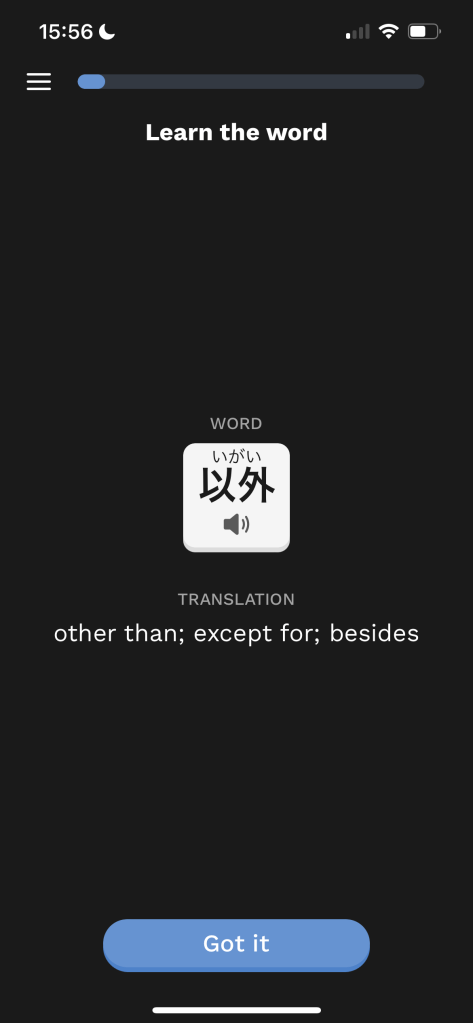
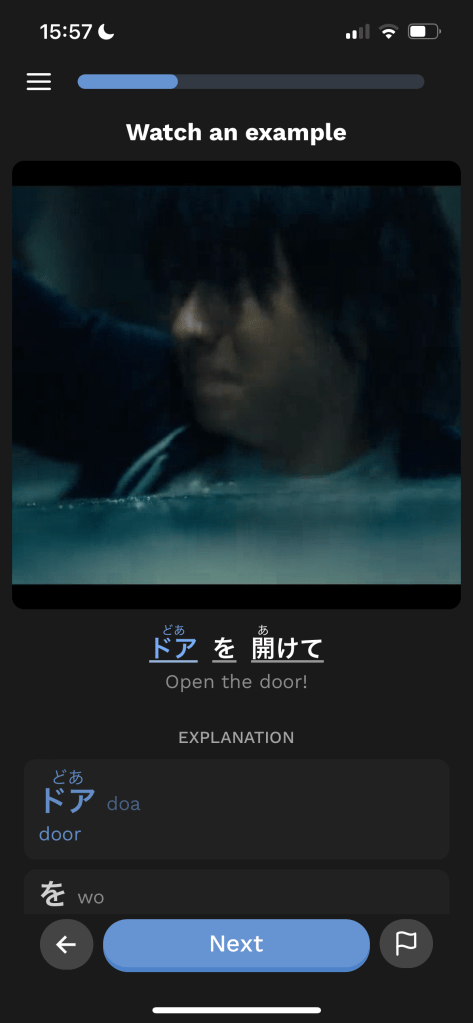
Recently, I came across an interesting app called Umi. You choose your relative vocabulary level. And in short 5-minute lessons, you will learn 5 words. You are first shown the word along audio, and later it gives you about 3 examples from modern Japanese movies/series/anime where that word is used. You will hear an audio along with a text. I think it is a great app, as it gives you different accents, speech patterns etc.

Songs
Last but not least, songs! What’s great about songs is that you can listen to them over and over again! It might be challenging to make yourself a playlist of songs if you are not familiar with Japanese music. But once you accomplish that, read a few lyrics, translate them, and best thing, you probably won’t even need to write a vocabulary as you will repeatedly listen to the same lyrics, it will just sink in.
My weird, suggestion is to go for Japanese 80s music because it is a – viby, b – mixed with English lyrics, so you might relate a bit better.
The most important thing to remember, when immersing yourself in a foreign language media is that it is OKAY to not understand every single thing! And, you don’t even have to understand every single thing to enjoy it! Moreover, there are some things you will never be able to make sense of in your own language and eventually will have to take them as they are. But just like a baby, who is bombarded with visual and audio information since birth you will not understand anything in the beginning, but as you grow you will be able to understand more and more until eventually, you will understand everything.
Reason: Having Conversation in Japanese
Weirdly enough, a great way of improving your Japanese listening is by speaking. When you pronounce the words, you get acustomed to the way they sound and it makes it easier for you to catch them when someone else speaks.
Just because you cannot go to Japan, does not mean you cannot hang out with Japanese people. Make Japanese friends! If you live in a big city, like London or New York, that shouldn’t be a problem, if you live in a smaller city, you might end up finding Online friends.
I’ve heard a lot of people are using MeetUp app for communicating with Japanese people. There are English & Japanese language exchanges that are held online and on-site, where strangers come together and spend half of the time speaking just in English, and the other half speaking just in Japanese. These are usually free or have a tiny fee, like £1.
You can find yourself a tutor or join a class, obviously, this will cost you a bit of money, but there are specific classes that focus only on speaking. And if you have your own tutor, you can always dedicate 10-20 minutes to speaking and listening.
I know it is beyond frustrating to listen to a conversation, or a monologue and be very lost, but as soon as you read the transcript every single thing makes sense. But BE KIND TO YOURSELF. If you incorporate a few of these tactics that we discussed or better, all of them, and dedicate a reasonable amount of time in your Japanese study to listening, you will significantly improve, as early as after one month!
So keep your head up and 頑張ってください!
 365 Nihongo
Leave a comment