
In Japanese, there are three main sentence types; these are noun sentences, adjective sentences, and verb sentences. Some of them can make a full sentence all by themselves with a single word.
はじめましょう!
Noun Sentences (名詞文 or めいしぶん)
A noun sentence is a sentence that consists of a noun or pronoun as the main subject or object. It usually expresses a fact or a statement of existence.
Example 1: 彼女(かのじょ)は学生(がくせい)です。– She is a student.
A noun must be followed by だ or です to create a full sentence. (Read more about the difference between だ and です here). Thus, the simplest noun sentence is noun + です (or だ).
Example 2: ラーメンです。- This is ramen.
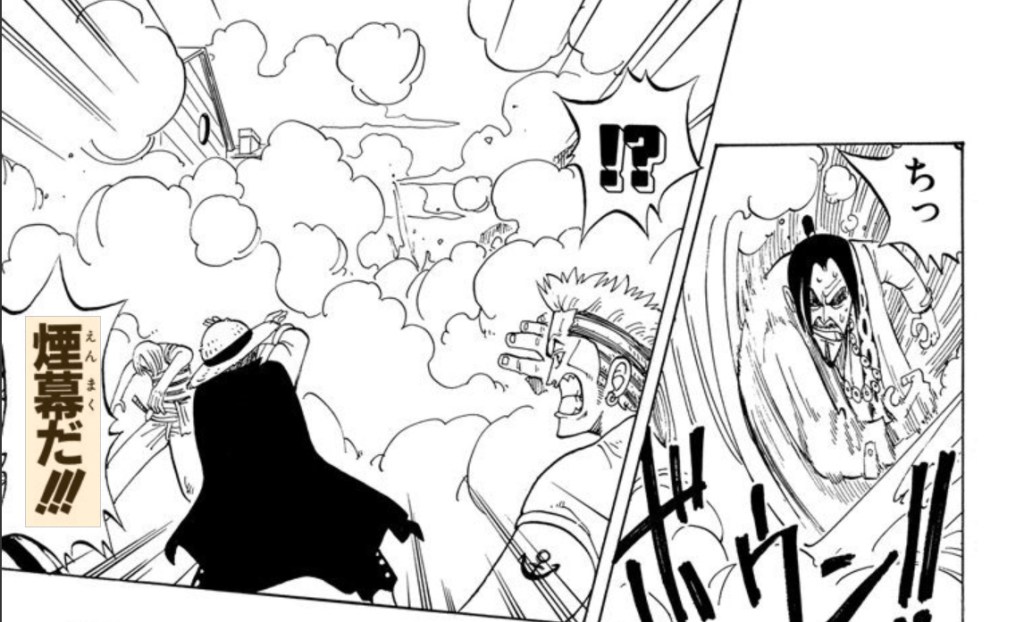
Example 3: 煙幕(えんまく)だ!!! – It’s a smokescreen!
OP Volume 1 Chapter 1 page 41
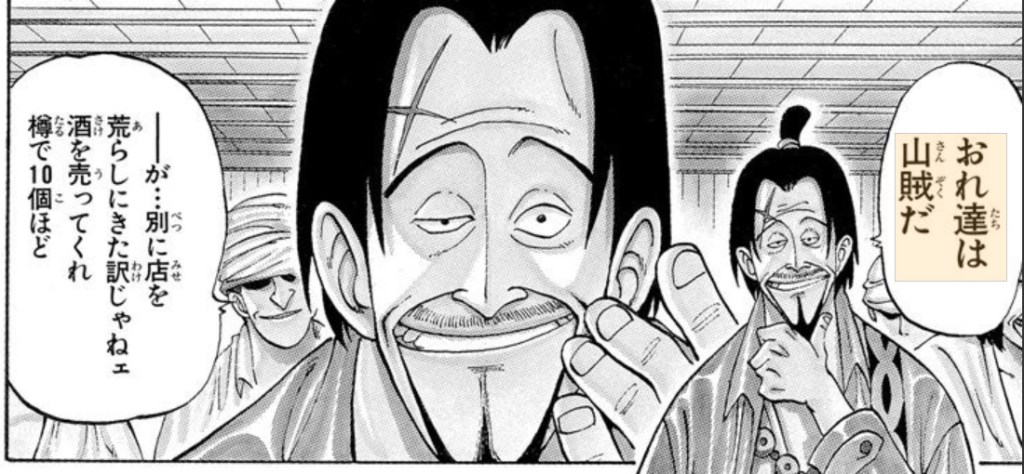
Example 4: おれ達(たち)は山賊(さんぞく)だ – We are mountain bandits.
OP Volume 1 Chapter 1 page 18
Adjective Sentence (形容詞文 or けいようしぶん)
An adjective sentence is a sentence that consists of an adjective as the main predicate. It usually describes the quality or characteristic of a noun or pronoun.
Example 1: 彼女(かのじょ)はきれいです。- She is beautiful.
In Japanese, there are two types of adjectives: い-adjectives (i-adjectives) and な-adjectives (na-adjectives).
い-adjectives do not need です or だ to make a complete sentence. You can use a dictionary form of an i-adjective to make a complete casual sentence.
Example 2: 寒(さむ)い。- It’s cold.
な-adjectives can be looked at as a special kind of noun in Japanese. They require だ or です to create a complete sentence even in casual Japanese.
Example 3: しずかです。- It is quiet.
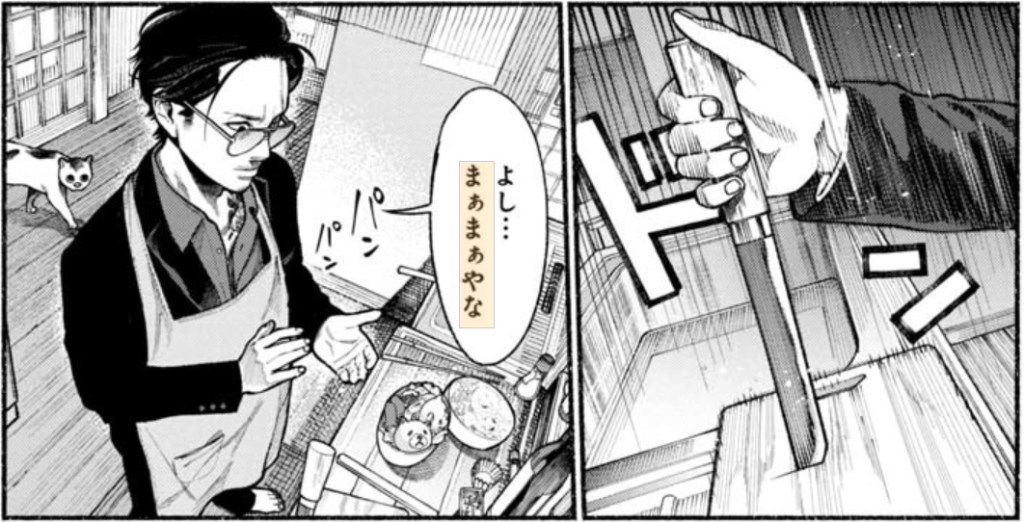
Example 4: まあまあやな – Not to bad, huh?
The Way of the House Husband Volume 1 Chapter 1 Page 7
Note: や in the Kansai dialect is a substitute for だ and です。な is a sentence-ending particle. (Read more about sentence ending particles here).
Verb Sentences (動詞文 or どうしぶん)
A verb sentence is a sentence that consists of a verb as the main predicate. It usually describes an action or state of being.
Example 1: 彼女(かのじょ)は勉強(べんきょう)します。- She studies.
Verbs can make stand alone complete sentences by themselves even in their plain and dictionary forms.
Example 2: 行(い)く! – I go (I will go)
Example 3: 食(た)べましょう! – Let’s eat!
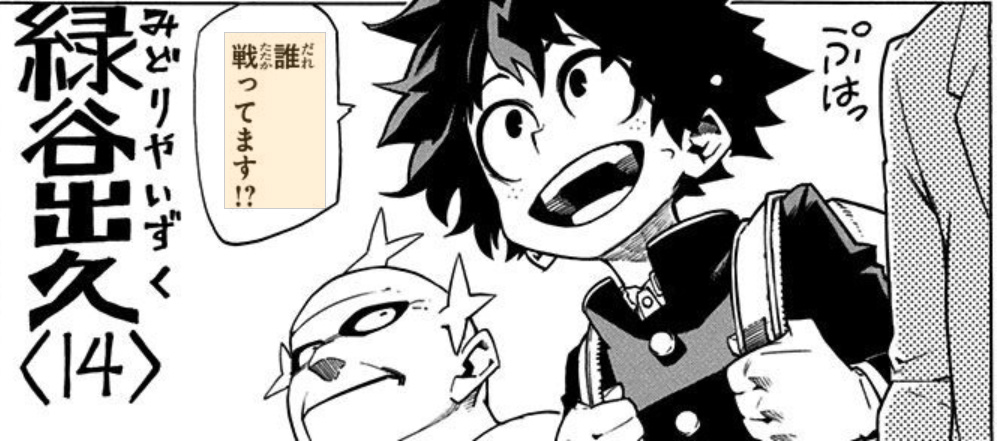
Example 4: 誰(だれ)戦(たたか)ってます? – Who is fighting?
MHA Volume 1 Chapter 1 page 10
Example 5: 私(わたし)が来(き)た! – I came (I’m here)
MHA Volume 1 Chapter 1 page 19

 365 Nihongo