

Thank you for coming here to advance your Japanese with help of Ghibli movies, and in particular, a fluffy giant!
HOW DOES THIS WORK? I put together a list of 300+ words that you will encounter in this anime that you can also download and print. Look through the vocabulary and make sure you are familiar with as many of the words as you can before you start watching the anime! Also, it is good to revise some of the grammar, especially the て form, as this anime is very て- form heavy 🙂
WHAT DO I NEED TO KNOW BEFORE I START? This anime is perfect for those who’ve been studying Japanese for 1-2 years already. Let’s say you finished your JLPT N5, and ready to learn more, this is perfect for you, as you will see all the grammar and phrases you’ve learned plus about 30% new vocabulary. If you are not at that level yet, don’t worry, you can still enjoy Totoro, but it might be a bit more challenging.
YOU MUST KNOW how to read hiragana and katakana before you start, though.
WHERE TO WATCH? I recommend watching on Netflix, as it has both Japanese audio and subtitles. Also, has minimum kanji and hiragana above each of them.
NOW, IT’S TIME TO GET READY FOR A PERFECT END OF THE WEEK WATCH.
Just one more question before we start
To begin, I’ve put together 5 interesting phrases that are used through the film as well as in other anime and everyday life. Please have a look!
- さつき : なに? ごよう?
- おかあさん : さつき、おいで。
- メイ : あ、メイも、メイも。
- さつき : じゅんばん!
- さつき : いってきます
- おとうさん&メイ : いってらっしゃい
- おとうさん : きをつけ!
- メイが お世話になりました。
- A full phrase is 何かご用ですか (なにかごようですか), meaning “Can I help you?” or “How can I help you?”
- おいで – is a very common way of saying “come here”; you will hear it multiple times in Totoro and other anime
- Mei: Mei too, Mei too!
- Satsuki: Wait your turn.
- Satsuki: I’ll be going.
- Father & Mei: Have a nice day.
- Father: Attention!
- おせわになります – is an expression of gratitude meaning “Thank you for looking after (someone)/taking care of (someone)”
Now! Here is your massive vocabulary! I know, it looks super scary, but take your time getting familiar with it! (or scroll down and download it)
Nouns
- おとうさん – father
- おまわりさん – police officer
- キャラメル – caramel
- うち – home
- ひっこし – moving home
- はし – bridge
- さかな – fish
- き – tree
- トンネル – tunnel
- うん – luck
- どんぐり – acorn
- へや – room
- りす – squirrel
- ネズミ – mouse
- はこ – box
- ふろ – bath
- ゴキブリ – cockroach
- えほん – picture book
- てんき – weather
- ところ – place
- かい – floor
- しごと – work
- め – eyes
- かいだん – stairs
- まど – window
- こども – children
- て – hand
- あし – foot
- よる – night
- ゆめ – dream
- かわ – river
- みず – water
- おとこのこ – boy
- せんたく – laundry
- あかあさん – mother
- みち – road
- きょう – today
- せんせい – teacher
- あした – tomorrow
- おべんとう – bento box
- ともだち – friends
- はな – flower
- はなや – flower shop
- じかん – time
- にわ – garden
- ぼうし – hat
- くち – mouth
- もり – forest
- あな – hole
- ひと – person
- ニュース – news
- だいがく – university
- ひ – day
- あめ – rain
- かさ – umbrella
- バス – bus
- でんしゃ – train
- しんぱい – worry, concern
- ねこ – cat
- むね – chest
- きのみ – nuts
- さる – monkey
- カニ – crab
- なつ – summer
- なつやすみ – summer holiday
- かぜ – wind
- からだ – body
- びょうき – illness
- どようび – Saturday
- げつようび – Monday
- びょういん – hospital
- ゆうがた – evening
- れんらく – contact
- ばしょ – place
- ばんごう – number
- でんわ – phone
- とうもろこし – corn
- バスてい – bus stop
- おとな – adult
- おんなのこ – girl
- いもうと – younger sister
- おねえさん – older sister
- おばあさん – grandmother
- おうえん – support
- おいまい – hospital visit
- かみのけ – hair
- べんじょ – toilet
- そうじ – cleaning
- むし – insect, bug
- やくそく – promise
- きょうそう – race
- くすのき – camphor tree
- やしき – residence, mansion
- おばけやしき – haunted house
- かってぐち – back door
- めだま – eyeball
- まっくら – total darkness
- りゅう – dragon
- スス – soot
- おばけ – ghost
- ようかい – ghost
- たんぼ – rice field
- おわり – end
- しゅっぱつ – departure, setting off
- ひみつきち – hideout
- うそ – lie
- うそつき – liar
- あまど – sliding storm shutter
- いま – now
- なか – inside
- うえ – above
- うら – opposite side, other side
- かんり – control, management
- となり – next (to), adjacent, house next door; neighbouring house
- こ – kid, child
- いそぎ – haste, hurry
- そこらじゅう – everywhere, all over the place
- ほこり – dust
- け – sign, indication
- わるさ – badness, mischief
- てんじょううら – above the ceiling
- おぼえ – memory, experience
- たうえやすみ – rice planting holiday
- くせっけ – frizzy hair, unruly hair
- ふとん – futon
- おたまじゃくし – tadpole
- トロル – troll
- こと – thing, matter
- あいさつ – greeting, salutation
- むかし – olden days; former
- おれい – thanks, gratitude
- どろ – mud
- はっしゃ – departure of bus, train
- つぎ – next, following
- でんぽう – telegram
- はたけ – field
- タカラ – treasure
- やま – mountain
- こんど – next time; another time; shortly; soon
- けんきゅうしつ – professors office, laboratory
- ほんけ – head house (family)
- しがい – outside the city, suburbs
- ぐあい – condition, state
- かぜ – cold, flu
- けんか – fight, argument
- まいご – lost child
- いえ – house
- サンダル – sandal
- いけ – pond
- き – spirit
- もの – thing
- バカ – idiot, fool
- あんしん – relief, peace of mind
- たのしみ – enjoyment
Verbs
- かくれる – to hide
- くる – to come, to arrive
- つく – to arrive, to reach
- まつ – to wait
- ある – to be (of inanimate objects); to exist
- みる – to see
- みせる – to show
- あける – to open
- おちる – to fall
- いる – to be (of animate objects); to exist
- はこぶ – to carry, to transport
- いく – to go
- でる – to leave, to come out
- みつける – to find, to discover
- すむ – to live
- とる – to take, to catch
- うごく – to move
- まちがえる – to make a mistake
- はなす – to speak
- あう – to meet
- こまる – to be troubled, to have difficulty
- おこる – to get angry
- なる – to become
- ねる – to sleep
- おきる – to wake up
- つくる – to make
- すわる – to sit
- たべる – to eat
- あそぶ – to play
- おもう – to think
- たつ – to stand
- やすむ – to rest
- いそぐ – to hurry
- ふる – to fall (rain, snow), to come down
- なく – to cry
- くたびれる – to get tired
- ひかる – to shine, to glitter
- くさる – to rot, to go bad, to decay
- こわれる – to be broken, to break
- わかる – to undertand
- くらむ – to be dazzled by, to be disoriented by
- ほじくる – to dig out, to pick
- ていれする – to look after, to care
- にげる – to run away, to get away
- みえる – to be seen, to be in sight
- そうだんする – to ask someone for advice
- くむ – to draw water
- つぶれる – to be crashed, to be destroyed
- わらう – to laugh
- おちつく – to settle in, to settle down
- たいいんする – to discharge from hospital
- わすれる – to forget
- つつむ – to wrap up, to pack
- だめ – no good, cannot, must not
- もどる – to return, to go back
- きえる – to disappear, to vanish
- きをつける – to be careful; to pay attention; to take care
- おくれる – to be late
- にゅういんする – to be hospitalised
- むかえする – to welcome, to go to meet
- かす – to lend
- たすける – to help, to assist, to save
- しる – to know, to be aware of
- のる – to get on, to ride
- つかう – to use
- まにあう – to be in time for
- かえる – to return, to come home
- けす – to turn off light
- ひえる – to cool down
- つれる – to take (someone) with one; to bring along
- きる – to hand up the phone
- のばす – to postpone
- しぬ – to die, to pass away
- かかる – to take time
- いなくなる – to disappear
- とおる – to go by, to go pass
- とまる – to stop
- さがす – to search for, to look for
- きまる – to be decided
- あまる – to remain, to be left over
- のびる – to stretch, to extend
- きく- to hear, to listen
- こげる – to burn
- きにいる – to like; to be pleased with
Adjectives
- ステキ – lovely, wonderful
- おおきい – big, large
- すごい – amazing
- いい – good
- くろい – black
- あかるい – light
- くらい – dark
- たいへん – terrible
- いそがしい – busy
- ふるい – old
- わるい – bad
- うれしい – happy
- あたらしい – new
- じょうず – skillful
- みじかい – short
- おもい – heavy
- りっぱ – splendid
- いたい – painful, sore
- げんき – lively, energetic
- じゅうぶん – enough
- おそろしい – terrifying, frightening
- つまんない – boring (colloquial)
- つまらない – boring, uninteresting, dull
- こわい – scary
- つめたい – cold, chilly
- きらい – hated, disliked
- すき – liking, being fond of
- おっかない – frightening, scary
- むり – unreasonable, impossible
- ずるい – sneaky, unfair
- エライ – excellent, admirable
- ねむい – sleepy, drowsy
- おそい – late
- たのしい – enjoyable, fun
- おいしい – delicious
- かわいい – cute
- おかしい – strange, odd
- ちいさい – small
- ふかい – deep
- ぼろ – shabby, run down
Adverbs
- はやく – quickly
- ときどき – sometimes
- やっぱり – after all
- たぶん – probably, perhaps
- また – again, once more, also
- すぐ – immediately
- いっぱい – a lot, many
- きゅうに – suddenly, swiftly
- すこし – a little
- ニコニコ – with a friendly grin; smilingly
- いっしょに – together
- とても – very
- もう – already, yet
- もちろん – of course
- おとなしく – obediently, quietly
- ちょっと – a little bit
- あいかわらず – as usual
- そっくり – exactly like, just like
- すっかり – all, completely
- ちゃんと – properly, exactly
- きっと – surely, undoubtedly
- いつも – always
- ずっと – the whole time, long ago
- どんどん – rapidly
- いったん – for a short time; briefly; temporarily
- あんがい – unexpectedly, surprisingly
- ちょうど – exactly, precisely
- ゆっくり – slowly, unhurriedly, without haste
More words ・O・
- ほら!- look!; see!; here!; there!; hey!
- それとも – or, or else
- どこ – where
- なに – what
- こんな – this sort of, this kind of
- みんな – everyone
- ひとりで – alone, by yourself
- じぶん – myself, yourself, oneself
- とちゅう – on the way, en route
- せいがでる – to work hard

I organised all the words in the alphabetical order and you can download it for free 🙂
Study this vocabulary with Quizlet via link:
https://quizlet.com/gb/732293748/totoro-extensive-vocabulary-flash-cards/
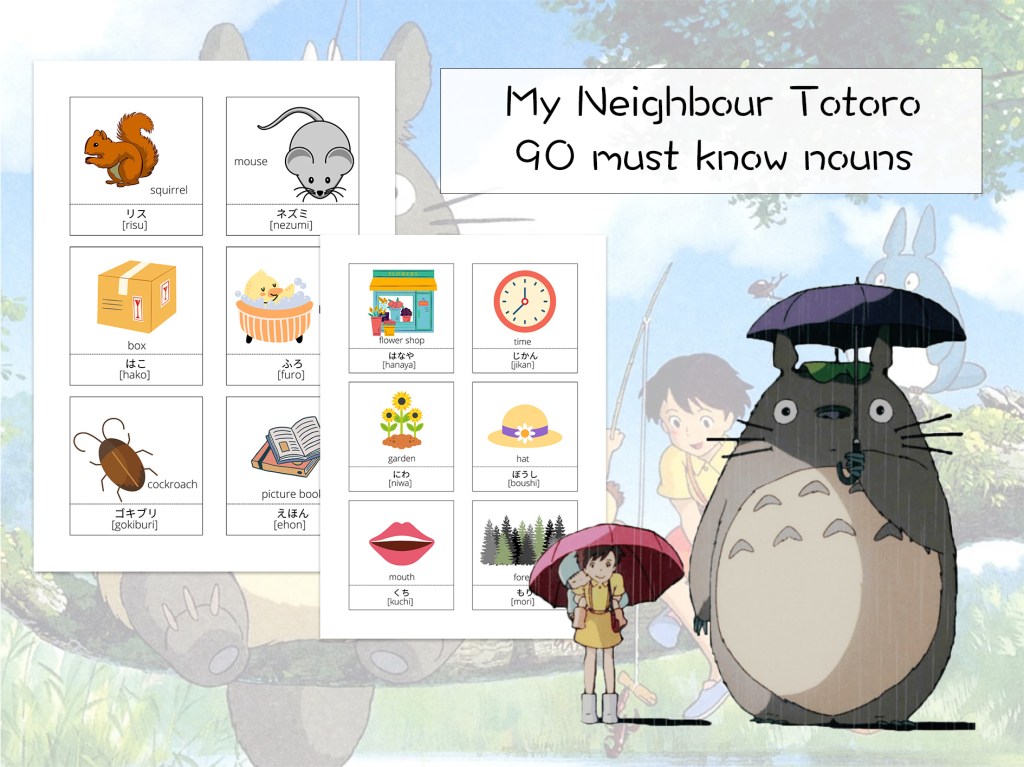
Get yourself some printable flashcards from our Etsy to learn quicker!

Well done! Wasn’t this super fun? If you loved learning new words with My Neighbour Totoro, make sure to have a look at more challenging movies that we have broken down (the links should be just below here). If there are not up yet, make sure to subscribe to our newsletter to know when your next Ghibli journey ready to begin.

Watch Ponyo Next
 365 Nihongo